

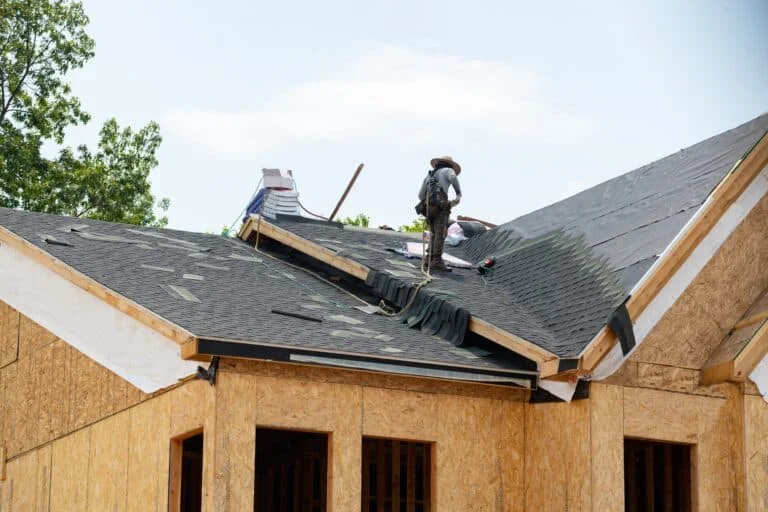
Tyler Roof Repair provides shingle roof repair and replacement in Tyler, TX and throughout East Texas, addressing the cracked, missing, lifted, and storm-damaged shingles that are among the most common problems homeowners deal with in this climate. East Texas hailstorms, high winds, and prolonged heat cause shingle roofs to age faster than the product warranties suggest, and small shingle failures that go unaddressed tend to become much larger water damage problems inside the home. Our licensed, bonded, and insured crew has worked shingle roofs across this region for over 20 years, and we always assess whether targeted repairs can extend the roof’s life before recommending a full replacement. Tyler Roof Repair is family-owned and 100% recommended on Facebook by East Texas homeowners. Call 903-426-1151 any time for a free estimate and an honest recommendation on whether your roof needs a repair, a partial replacement, or a full system.
Asphalt shingles cover the majority of residential roofs in Tyler and East Texas. They are a proven, cost-effective system that handles the region’s heat, hail, and heavy rain reasonably well when installed and maintained properly. When something goes wrong, the question is almost always the same: is this a repair or is it time to replace?
We repair and replace shingle roofs throughout the Tyler area. The answer to that question depends on what is actually happening with your roof, and we will give you an honest read after an inspection.
The Repair vs. Replacement Decision for Shingles
Shingle roofs are worth repairing when the damage is localized. Missing shingles after a wind event, a flashing failure around a chimney or skylight, a section with hail damage that does not extend across the whole roof: these are targeted problems that targeted repairs solve. Matching shingles is straightforward on most residential roofs, and a good repair is not visible from the street.
Replacement becomes the better option in a few specific situations. A roof past 20 to 22 years with widespread granule loss is approaching the end of its effective service life, and repeated repairs start to cost more than they recover. Multiple leaks appearing in different areas of the roof suggest systemic failure rather than isolated damage. Soft spots in the decking mean moisture has gotten into the structural layer and the underlying damage has to be addressed anyway.
The most common mistake we see is homeowners choosing repair when replacement would have been more economical over a three-year horizon, and contractors recommending replacement on roofs that have years of serviceable life remaining. Neither outcome is good. We will show you what we found and explain the tradeoffs so the decision is yours to make with accurate information.
Granule Loss and What It Actually Means
Granules are the mineral coating on the surface of asphalt shingles. They protect the asphalt from UV degradation and provide fire and impact resistance. Some granule loss is normal over time; heavy, accelerated loss shows up in gutters as dark sediment and leaves bare patches of asphalt visible on the shingles. Once the asphalt is exposed to direct sun, it hardens and cracks relatively quickly.
Light granule loss on a 10-year-old roof is not an emergency. Heavy granule loss on a 15-year-old roof means the clock is running. An inspection will tell you where your roof falls on that spectrum.
Impact-Resistant Shingles
East Texas gets hail. Class 4 impact-resistant shingles cost 10 to 20 percent more than standard architectural shingles but hold up significantly better in hail events, and many Texas insurance carriers offer premium discounts for them. If your roof is being replaced, it is worth the conversation about whether impact-resistant shingles make financial sense given your insurance situation and the typical storm exposure in this area.
Schedule a free inspection and we will assess your shingle roof and give you a clear picture of what it needs and what your options are.