Tyler Roof Repair installs and repairs PVC roofing systems in Tyler, TX and the surrounding East Texas region, providing commercial and residential property owners with a high-performance flat-roof membrane that resists chemicals, UV degradation, and the standing water that builds up on low-slope surfaces after East Texas rainstorms. PVC is one of the most dimensionally stable single-ply materials available, and when heat-welded seams are installed correctly, it creates a watertight surface that performs reliably through decades of summer heat and severe weather. Our licensed and insured team has worked East Texas flat roofing for over 20 years and approaches every PVC project with an honest assessment before any work begins. Tyler Roof Repair is 100% recommended on Facebook by East Texas property owners who have worked with us firsthand. Call 903-426-1151 any time, day or night, for a free inspection and quote.
PVC roofing is a single-ply membrane system used on flat and low-slope commercial buildings. If your Tyler-area business has a PVC roof that is leaking, or you are evaluating flat roofing options for a new or renovated building, this page covers what sets PVC apart and where it performs best.
How PVC Roofing Works and Why It Is Built for Commercial Use
PVC (polyvinyl chloride) membranes are heat-welded at the seams, which creates a continuous, fully bonded waterproof barrier. That welded seam is the key differentiator from adhesive-seam systems, which rely on glue that can degrade over time. A properly welded PVC roof is one of the most watertight flat roofing systems available.
The membrane also has strong chemical resistance, which makes it the right choice for restaurants, food processing facilities, and any building where grease, oils, or industrial chemicals might be present on or near the roof. TPO is cheaper and slightly more reflective in ideal conditions, but it breaks down faster when exposed to chemical contamination.
In East Texas, the summer heat load is a real consideration. PVC’s white reflective surface reduces heat absorption, which translates directly to lower cooling costs for the building below.
What We Do With PVC Roofs
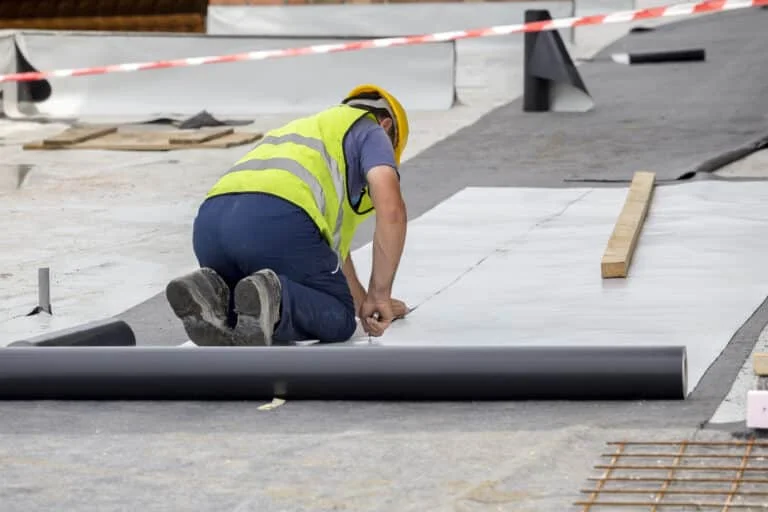
We install new PVC systems on commercial buildings throughout the Tyler area, including full membrane replacement on existing flat roofs. Installation involves assessing the existing deck and insulation, confirming proper drainage, selecting the right membrane thickness for the building’s use, and heat-welding every seam to manufacturer specifications.
We also repair existing PVC roofs. Common issues include seam separation at joints and penetrations, punctures from foot traffic or dropped tools, cracked flashing around HVAC equipment, and membrane shrinkage that pulls flashings away from parapet walls. Most of these repairs are straightforward when caught early. Heat-welded patches bond permanently to the existing membrane and restore full waterproofing.
PVC vs. TPO: The Honest Comparison
Both are good flat roofing membranes. TPO is the more commonly installed option today because it costs less per square foot. PVC typically runs 10 to 20 percent more but offers better chemical resistance and has a longer performance track record. PVC membranes from the 1970s are still in service on some commercial buildings.
For a standard office building or retail space with no chemical exposure, TPO is a reasonable choice. For a restaurant, industrial facility, or any property where chemical resistance matters, PVC is worth the premium. We will tell you which makes more sense for your specific building rather than defaulting to whichever carries the higher margin.
When Your PVC Roof Needs Attention
Signs that a PVC roof needs repair include visible bubbling or ridging in the membrane, which indicates adhesion failure or trapped moisture; water stains on interior ceilings near HVAC units or drains; seams that have separated or lifted at the edges; and standing water that remains more than 48 hours after rain. Any of these warrants a professional inspection before the next storm season.
Schedule a free inspection and we will assess your PVC roof, document what we find, and give you a clear answer on repair vs. replacement.