
Tyler Roof Repair handles flat roof and TPO repair in Tyler, TX and across East Texas, delivering targeted fixes that stop leaks, address membrane failures, and extend the working life of your roof without pushing an unnecessary full replacement. TPO roofing is widely used on commercial buildings and low-slope residential properties because it reflects heat and resists punctures, but it requires skilled repair when seams separate, flashing lifts, or drainage becomes compromised. Our licensed and insured crew has worked East Texas flat roofs for over 20 years, giving us the experience to identify the real source of a leak rather than just patching what is visible. Check what East Texas property owners say about our work on Yelp before you book. Call 903-426-1151 around the clock for same-day callbacks and a straight answer on your flat or TPO roof.
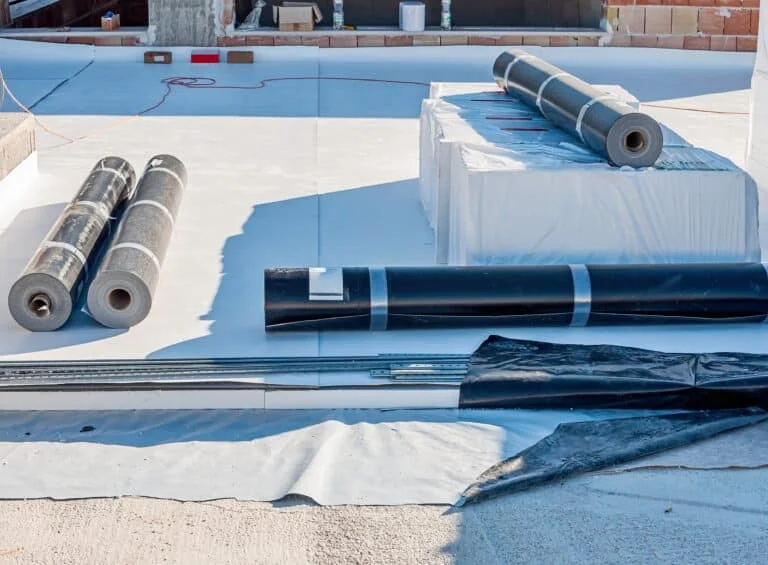
TPO is the most widely installed flat roofing membrane in commercial construction today, and for good reason: it is energy-efficient, heat-weldable, and durable under the kind of UV load East Texas buildings take in summer. But TPO roofs fail in predictable ways, and most of those failures are repairable without tearing off the whole system.
We repair flat roofs and TPO systems on commercial buildings, retail spaces, and industrial properties throughout the Tyler area. If your roof is leaking or showing wear, this page covers what causes TPO problems and how to know whether you are looking at a repair or a replacement.
Why TPO Roofs Fail and Where to Look First
TPO failure almost always starts at transitions: the seams between membrane sheets, the flashings around HVAC curbs and pipe penetrations, and the termination bars at roof edges and parapet walls. The field of the membrane is rarely the problem on a TPO system in good condition. When a flat roof leaks, the water entry point is usually a seam that has opened, a flashing that has lifted, or a puncture from foot traffic or dropped equipment.
Standing water is the other major issue. Flat roofs are designed to drain within 48 hours of rain. If water is still sitting on your roof days later, the drainage is undersized or clogged, and that ponding is accelerating membrane wear and putting weight stress on the deck. It needs to be addressed, not just monitored.
Heat-welded TPO seams are strong when installed correctly. When they fail, it is usually because of poor original installation technique, seam contamination during construction, or thermal stress from repeated expansion and contraction on a roof with inadequate insulation below. We can reweld or patch most seam failures cleanly without replacing the entire membrane.
Flat Roof Systems We Service
We work on all commercial flat roofing systems in East Texas, including TPO, EPDM rubber roofing, PVC, modified bitumen, built-up roofing (BUR), and metal flat roofs. The repair approach differs by material, and we diagnose accordingly rather than applying a one-size approach.
Repair vs. Replacement on a Flat Roof
A flat roof is worth repairing when the membrane itself is intact across most of the surface, when failures are isolated to specific seams or penetrations, and when the insulation and deck beneath are dry. Once moisture has gotten into the insulation layer and saturated large areas, the repair economics shift because wet insulation needs to come out.
The honest test is an infrared scan or core sample after heavy rain. We can tell you with confidence whether the damage is surface-level or whether you are dealing with a system that has been compromised beneath the membrane.
Schedule a free flat roof inspection and we will assess your TPO or flat roof system, document what we find, and give you a clear answer on whether repair or replacement is the better path.