

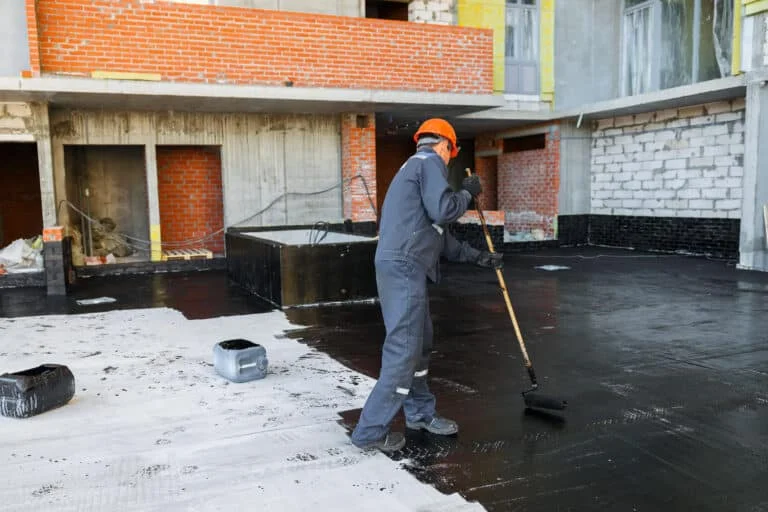
Tyler Roof Repair installs and repairs modified bitumen roofing systems in Tyler, TX and across East Texas, serving commercial and residential property owners who need a proven flat-roof solution that holds up to this region’s demanding climate. Modified bitumen is a reinforced asphalt-based membrane that performs well in areas with temperature swings, UV exposure, and heavy rainfall, making it a practical and cost-effective choice for low-slope roofs throughout Smith County. Our licensed, bonded, and insured crew brings over 20 years of East Texas roofing experience to every modified bitumen project, and we take a repair-first approach whenever the existing system can be extended rather than replaced. Read what local property owners say about our work on Yelp before you schedule. Call 903-426-1151 day or night to get a free inspection and a straight answer on your roof.
Modified bitumen is an asphalt-based flat roofing system that has been in commercial use since the 1970s. Unlike single-ply membranes such as TPO or EPDM, it is a multi-layer system, which gives it durability advantages in certain applications. If your building has a mod bit roof or you are evaluating flat roofing options, this page covers what makes modified bitumen different and when it makes sense.
We install and repair modified bitumen roofing on commercial and residential flat-roof buildings throughout Tyler and East Texas.
What Modified Bitumen Actually Is
Modified bitumen starts with asphalt, which has been used in roofing for over a century, and improves it with polymer modifiers that add flexibility and resistance to temperature cracking. The two most common modifiers are APP (atactic polypropylene), which gives the membrane a harder, more UV-resistant surface, and SBS (styrene-butadiene-styrene), which makes it more flexible and better at handling thermal movement.
The system is typically installed in two plies: a base sheet bonded to the deck and a cap sheet on top. This redundancy is one of its advantages over single-ply systems. A puncture or surface failure in the cap sheet does not immediately mean a leak, because the base sheet is still intact. On buildings with HVAC technicians, delivery equipment, or other regular rooftop activity, that extra layer matters.
Installation methods include torch-applied (the cap sheet is heat-fused to the base), cold-process (adhesive-applied, no open flame), and self-adhered peel-and-stick systems. Torch application is the most common and creates a very strong bond when done correctly.
How Modified Bitumen Compares to Single-Ply Membranes
Compared to TPO and EPDM, modified bitumen costs more per square foot to install because it requires more material and labor. Its advantages are the multi-layer construction, easier repairability, and a long track record in Texas conditions.
TPO and PVC are more popular for new commercial construction today because they cost less and perform well on buildings with straightforward drainage and limited rooftop access. Modified bitumen remains a strong choice for older buildings being re-roofed, for roofs with a lot of equipment and foot traffic, and anywhere the redundancy of two plies provides meaningful protection.
Repair and Maintenance
Modified bitumen is one of the more repair-friendly flat roofing systems. Damaged sections can be cut out and replaced, and patches adhere directly to the existing membrane without requiring the full surface preparation that some single-ply repairs need. Seam failures, blisters, alligatored surface areas, and flashing failures are all common issues we address.
A reflective coating applied over an aging mod bit cap sheet can add years of service life and meaningfully reduce heat gain in summer, which matters for energy costs in East Texas buildings.
Schedule a free inspection and we will assess your modified bitumen roof and tell you honestly what it needs.